Becoming a Falconer
Falconry is a serious, regulated commitment. It asks for daily care, years of learning, real money and a willingness to put an animal’s welfare ahead of your schedule. This guide explains the path in Kentucky so you can decide with your eyes open.
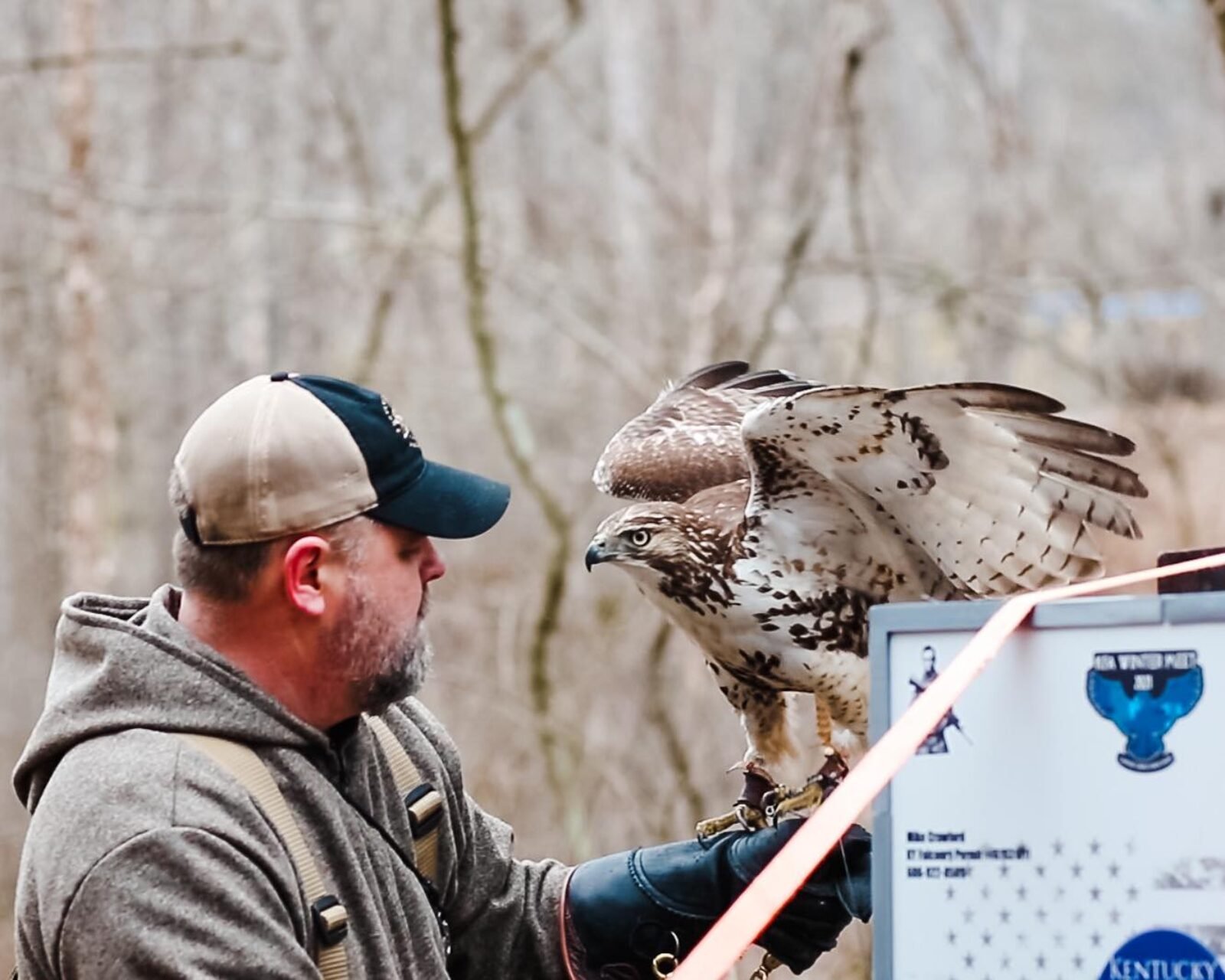
Real falconry looks nothing like the movies.
What falconry is
- Training a raptor to hunt wild game in partnership with you.
- Patience through slow, sometimes frustrating training.
- Getting your bird out often, on land with real chances at game.
- Putting the bird's wellbeing first, every day.
What falconry is not
- Keeping an exotic pet.
- Owning a raptor for display, education programs or profit.
- A hobby you can pause when life gets busy.
- Something you can learn alone from videos.
Six stages, in roughly this order.
01
Learn the sport and its responsibilities
Falconry means training a raptor to hunt wild quarry with you. Training takes patience, birds do not always succeed, and the bird’s wellbeing comes before everything else. Read widely, watch birds fly, and ask falconers what a normal week looks like.
- Falconry birds are not pets, and falconry is not a way to keep a raptor for display or profit.
- A bird needs to hunt often, in places where it gets real opportunities at game.
Verify
Start with the resource library.
02
Review current Kentucky and federal requirements
Falconry is regulated by the Kentucky Department of Fish & Wildlife Resources (KDFWR) under state regulations that meet federal standards set by the U.S. Fish & Wildlife Service. Requirements change, so read the current versions yourself rather than relying on a forum, a friend or this page.
- Request or download KDFWR’s falconry information.
- Read the federal falconry standards in 50 CFR Part 21.
- Check which hunting license and hunter education requirements apply to you.
Verify
03
Connect with falconers and explore sponsorship
Apprentices work under a sponsor: an experienced falconer who vouches for you, guides you and checks your bird and facilities. Sponsoring takes real time, so build the relationship first and show you are serious.
- Attend KFA gatherings and field meets when they are announced.
- Ask KDFWR for any list of potential sponsors in its falconry materials.
- Email KFA at falconrykentucky@gmail.com for help making introductions.
Verify
KFA tries to connect serious applicants with potential sponsors but cannot guarantee one.
04
Exams, permits, inspections and facilities
Expect a written exam covering care and maintenance, equipment, health care, hunting techniques, training and regulations. Your raptor facilities and equipment are inspected by KDFWR, and your permit application includes the inspection report and your sponsor’s commitment.
- Study before you schedule the exam.
- Build facilities with your sponsor’s input and to current standards.
- Submit a complete application package to KDFWR.
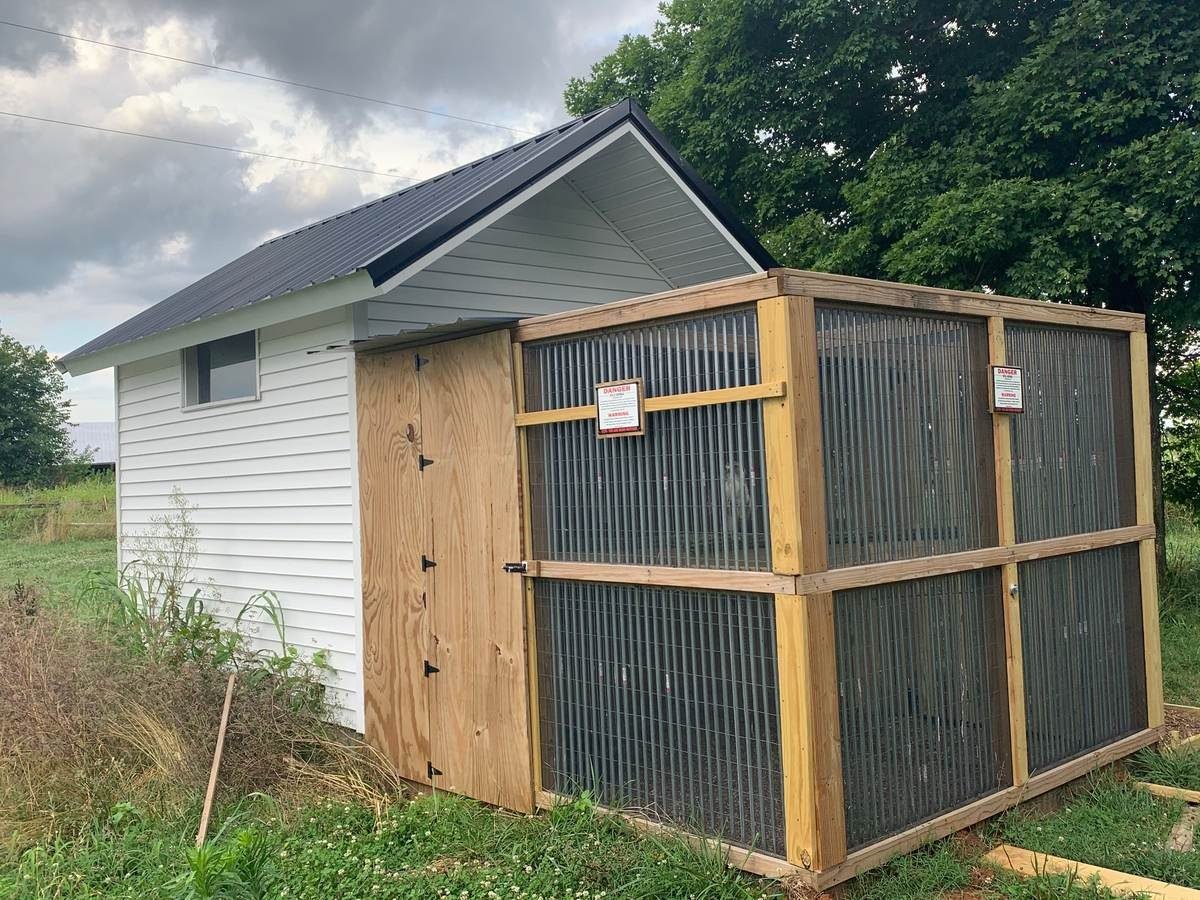
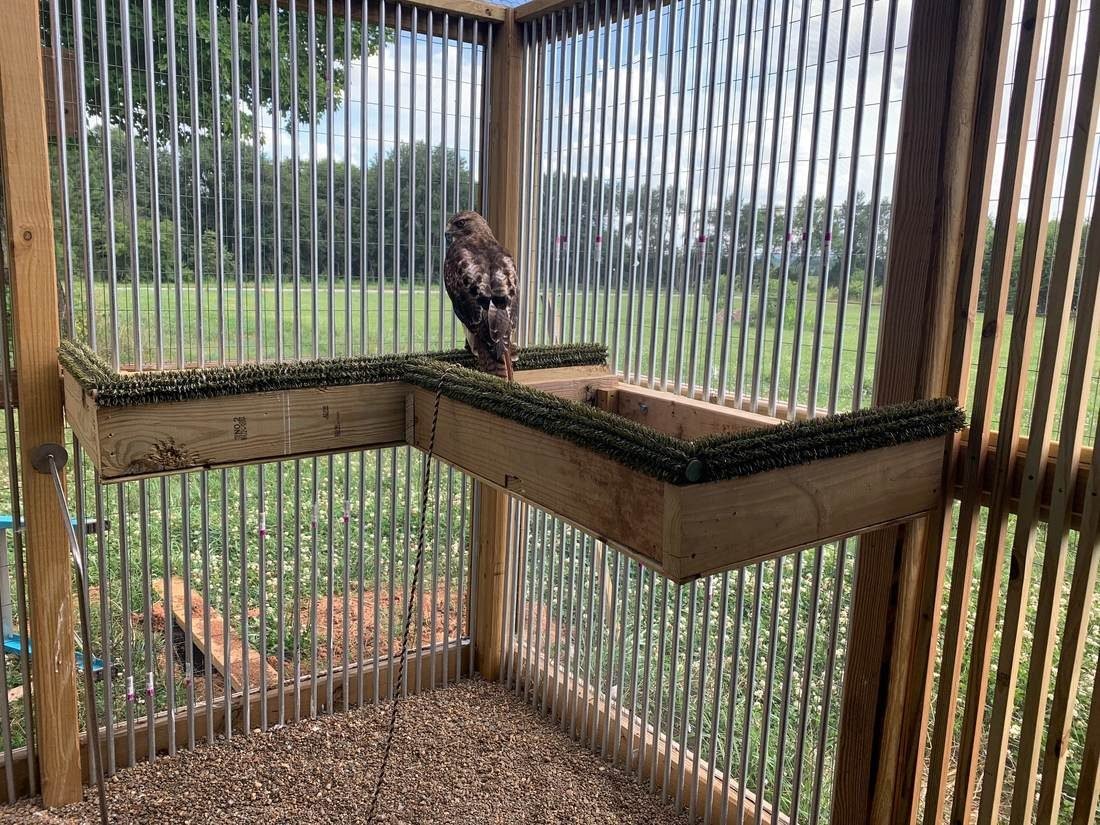
A Kentucky falconer’s mews, outside and in. Build to current regulations; your inspection decides. Photos: KFA
Verify
Passing score, fees, exam scheduling and processing times are set by KDFWR. Confirm them on the KDFWR site.
05
Prepare for equipment, housing, vet care and husbandry
Have everything in place before a bird arrives: mews and weathering area, an accurate scale, perches, glove, jesses, leash and swivel, bath, and a reliable food supply. Many falconers also use telemetry. Line up an avian vet and plan for daily care through the whole season.
- Budget for upkeep, not just setup.
- Learn trapping season rules and reporting duties before you trap.
Verify
Equipment requirements are listed on the KDFWR inspection form (PDF).
06
Keep learning and stay involved
An apprenticeship is the start of an education, not the end. Keep detailed records of your bird, flights and game taken, since upgrading requires documented experience. Stay close to your sponsor, hunt with other falconers, and help the next apprentice when it is your turn.
Verify
Upgrade requirements and reporting forms are on the KDFWR falconry page.
Before you begin
Can you check every box?
If any of these gives you pause, that is useful information. Talk it through with a falconer before you go further.
- I can commit time every day, including bad-weather days and the whole hunting season.
- I have a realistic budget for housing, equipment, food, licenses, permits and vet care.
- I have space and permission to build a mews that meets current standards.
- I have found an avian veterinarian within reasonable distance.
- My household (and landlord, if I rent) supports keeping a raptor.
- I have access to land where I can legally hunt.
- I have read the current KDFWR falconry information and federal standards.
- I have talked in person with at least one practicing falconer.
- I understand a raptor is not a pet and its welfare comes first.
- I am ready for a multi-year apprenticeship and careful record-keeping.
Membership is not a permit.
Joining KFA does not grant a falconry permit, waive any state or federal requirement, or guarantee a sponsor. Permits are issued by KDFWR. KFA can help you learn and meet people; the license is between you and the agencies.
Frequently asked questions
Is a falconry bird a pet?
No. A falconry bird is a hunting partner, often a wild-caught raptor, kept under permit so it can hunt. If you want a pet, falconry is not the right path.
Does joining KFA give me a falconry permit?
No. Permits are issued by the Kentucky Department of Fish & Wildlife Resources under state and federal rules. KFA membership is a community membership; it does not grant a permit, skip any requirement or guarantee a sponsor.
Do I need a sponsor?
Apprentices work under a sponsoring falconer as required by federal and state rules. Sponsoring is a real time commitment, so build a relationship first and show you are serious. KDFWR materials and KFA can help you find potential sponsors.
How long does it take to become a falconer?
Plan in years, not weeks. After the study, exam, facility inspection and permit, an apprenticeship lasts a minimum period set by regulation before you can apply to upgrade. Check KDFWR for current terms.
What birds can an apprentice fly?
The species and number of birds allowed depend on your permit class and current regulations. Read the KDFWR falconry rules and talk with your sponsor before deciding what to trap or acquire.
What does it cost?
Costs vary a lot. Expect to pay for a mews, equipment such as a scale, perches, gloves and possibly telemetry, plus a steady food supply, licenses and permit fees, travel and veterinary care. Ask several falconers what they actually spend.
Do I need a hunting license?
Falconry is a form of hunting, so Kentucky hunting license rules apply. Hunter education may also be required depending on your age and where you will hunt. Confirm with KDFWR.
Where do I take the falconry exam?
KDFWR arranges the exam. Contact the department or your local conservation officer for current options and scheduling.
General information, not legal advice. Always confirm current requirements with KDFWR and the U.S. Fish & Wildlife Service.